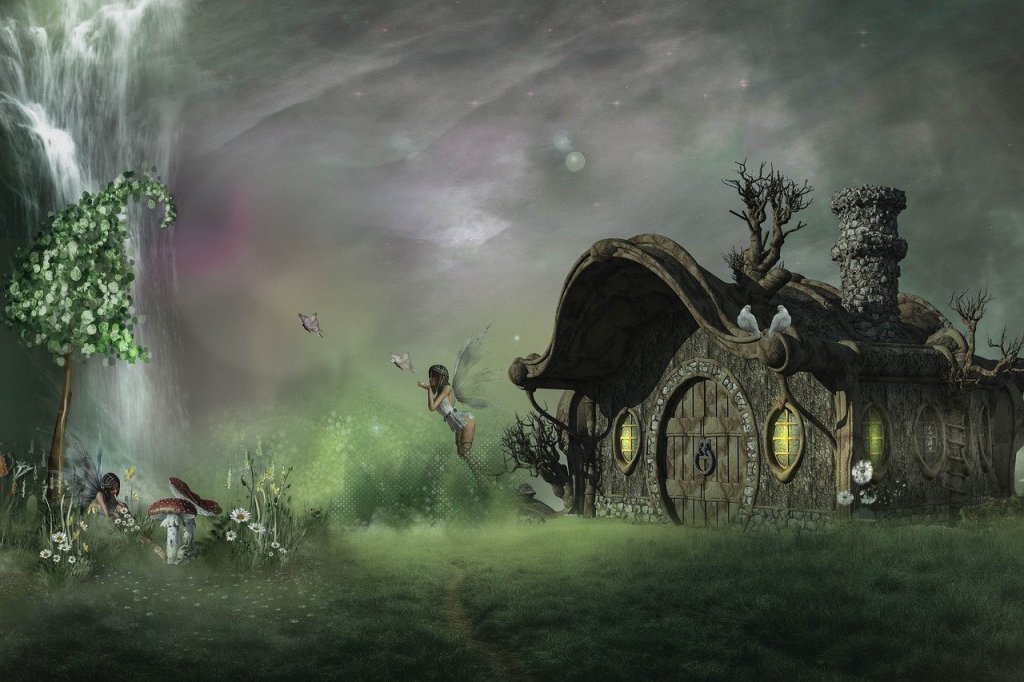
I know very few people who do believe in Faeries. Many are attracted to the idea of them ( or what they think they are). For most people, the prevailing belief is that faeries exist more as a product of our imagination – a fleeting dream easily cast aside.
Yet, faeries transcend mere fantasy. They are not simply faeries. They embody the very spirits of the earth, residing at the heart of nature’s essence. They are seen not by those who write or fantasise about them but by those who are intimately connected with nature; individuals who graciously welcome these beings to coexist amongst us.
FAIRY ETIQUETTE
The culture of faeries starkly differs from our own, encompassing distinct morals and etiquette. Although you see me referring to them as ‘faeries’, generally such a term is considered impolite and disrespectful. In the past, people may have referred to them with names such as ‘The Fair Folk’. Faeries command respect from humans, and can easily turn malevolent should this respect be disregarded or dishonoured.
Faeries in general are very private creatures, and wary of humans. They disdain people who openly discuss them in detail, and individuals who share their encounters with faeries risk the potential of malicious backlash should the tales spread too widely. Regardless of which faery you may come across, one rule remains clear; NEVER BOAST ABOUT IT. You will almost always be punished.
Faeries often move among us in disguises or conceal themselves from humanity entirely. They do not like to be seen by humans. Those caught spying on faeries risk being blinded by them.
In faery lore, it is beneficial to express gratitude when receiving a gift. However, one should avoid explicitly giving thanks for the gift, as it risks offending them. Offering a gift in return is advisable, even if faeries do not ask for it, unless you are prepared to be indebted to one. Leaving offerings such as honey or cakes is a common way to demonstrate appreciation for faeries.
Being mischievous in nature, faeries often engage in playful thievery, pilfering items from homes or relocating them. I often find things in my house disappear, only to reappear in obvious places when I request for their return. Reacting with frustration and anger at a lost item only seems to amuse faeries, making the chances of retrieval even slimmer. When striking deals with faeries, it is crucial to make your choices carefully, as going back on your word is a dangerous option.
Numerous folk tales narrate romantic entanglements between faeries and humans. Unfortunately, these tales typically end in sorrow, as the human involved often cannot resist sharing their enchanting encounters with others.
While many faeries can be kind and harmless, others may harm humans without cause. They may steal children and leave Changelings in their place, cause blindness, madness, sickness or even death. The common thread in all these folklores is the importance of respecting faery domains, as a lack of respect will anger them and in turn lead to retaliation.
FAERY CIRCLES AND THE OTHERWORLD
The Otherworld is commonly described as a realm for all faeries, existing on a plane separate from our own. Allegedly, there are portals scattered across the world that led to the Otherworld, however the few people who do go there are often taken unwillingly, or are accidentally trapped there. In general, people who go missing and find themselves in the Otherworld never see the human world again.
Time works differently in the Otherworld. What might be a single year in the human world could equate to a hundred years in the realm of faeries. Some stories tell of travellers who were led to the Otherworld and remained there for many years before returning home, only to discover that mere minutes had passed. Others speak of brief visits where travellers return to find their friends and family aged or deceased in the time they spent within the Otherworld. Those who did return often found themselves wrought with madness, obsessively longing to return to the pleasures they had found in the land of Faerie, withering away as their terrible thirst remained unquenched.
Faery rings are infamous gateways to the Otherworld. To step in one means to risk being trapped. Venturing alone in old, overgrown woods or natural landscapes is also said to heighten one’s vulnerability to faery encounters. Those who fall in love with faeries may choose to go to the Otherworld to be united with their mystical partners.
FAERY FOOD
Eating Faerie food is considered incredibly dangerous, as doing so makes the consumer a part of Faerie itself, preventing them from leaving the Otherworld and returning to the land of the living. Faerie food presented as gifts also carries potential peril, sometimes being glamoured to appear as ordinary food when it is actually a substance that could inflict serious illness upon the unsuspecting recipient.
Offerings to Faeries, such as cakes and honey, are a common practice to seek their favor, and such gestures are often met with deep appreciation.
FAERIES AND CONTEMPORARY WITCHES
Many modern day witches often incorporate faeries into their practices. By fostering a relationship through gifts, appreciation and respect, faeries may serve as protectors by providing warnings of danger, amplify spells, or bring good luck to witches who engage with them.
References
- The Fairy Bible (Moorey, 2008)
- Everything You Need to Know About The Fae Folk (Tea and Rosemary, 2021) Everything You Need To Know About The Fae Folk | Tea & Rosemary (teaandrosemary.com)
 Ethereal Chronicles
Leave a comment